
French Polynesia
In the middle of the South Pacific Ocean, about 17,000 kilometres from Paris, lies a territory where France made its mark in the mid-19th century. Composed of more than a hundred islands and islets that are as many confetti scattered in the Pacific Ocean, over an area equivalent to that of Europe, French Polynesia officially became an overseas territory in 1946. In total, five archipelagos make up French Polynesia: the Society, the Marquesas, the Australs, the Tuamotus and the Gambier Islands. Although the recent history of French Polynesia was tarnished by the nuclear tests at the Pacific test centre, the territory now capitalises on its varied landscapes, between green islands and heavenly lagoons, and its traditional culture. In recent years, the Marquesas Islands have been celebrating their Maori heritage with the biennial Marquesas Islands Arts Festival, for example, which allows people from the Pacific (including Hawaii and New Zealand) to reconnect with their common roots.

New Caledonia
Located off the coast of Australia and New Zealand, New Caledonia is a special overseas territory in more ways than one. It has a unique and original administrative status, created on the basis of the Nouméa Accord, signed in 1998 after a period of great tension between the French government and the indigenous Kanak population. This agreement provides a framework for the political evolution of New Caledonia towards greater autonomy. In addition to this unique status compared to other overseas collectivities, New Caledonia impresses by its extraordinary nature. It has numerous lagoons, part of which was classified in 2008 as a UNESCO World Heritage Site.

Reunion Island
More than 9,000 kilometres from Paris lies the island of Reunion, renowned for its varied nature, marked by a volcanic relief. Together with Mauritius and Rodrigues, it belongs to the Mascareignes archipelago. Relatively circular in shape, Reunion has a steep and rocky coastline, where swimming is impossible. Only a part of the western part of the island is suitable for relaxing at the beach. However, those who love Reunion Island appreciate this small territory in the Indian Ocean above all for its inland landscapes. These provide an ideal natural setting for sporting activities. The island's hiking trails are among the most beautiful in the world. Another remarkable sight is the eruption of the Piton de la Fournaise, which, together with the Piton des Neiges, forms the volcanic structure of Réunion. In addition, Reunion's gastronomy, which is as varied as the population itself, is not to be missed.

Mayotte
At the entrance to the Mozambique Channel, between the African coast and the Madagascan coast, lies the French island of Mayotte. The island, which belongs geographically to the Comoros archipelago, has a rich and abundant fauna and flora. Many endemic species live between forests and lagoons. Among them, the maki (pictured), a small mischievous lemur, is one of the symbols of Mayotte. Culturally, the island is unique in the ecosystem of French overseas territories in that its population is predominantly Muslim. It is estimated that 95% of the Mahorais are Sunni. The young people of Mayotte attend both the Koranic school and the school of the Republic. The official language of Mayotte is French, but a large part of the population speaks several regional languages every day. Mayotte is still not very popular with tourists and suffers from its proximity to other popular destinations such as Reunion, the Maldives and the Seychelles. Close to Africa and Madagascar, the island of Mayotte is a major illegal immigration zone. Every year, several thousand people are deported to their country of origin.

Saint-Barthélemy
25 kilometres south-east of Saint-Martin is Saint-Barthélemy. This island owes its name to Christopher Columbus who, when he discovered it at the end of the 15th century, decided to name it after his brother Bartolomé. It was not until the second half of the 19th century, after numerous claims between European colonial powers, that Saint-Barthélemy became definitively French. Like Saint-Martin, it was first attached to Guadeloupe before being transformed into a fully-fledged territorial community in 2007. French and American tourists alike appreciate "Saint-Barth'" for its superb landscapes alternating between white sandy beaches and volcanic relief, but also for its relatively dynamic life, as in Gustavia, the island's main town. The harbour and the port, surrounded by red-roofed houses, give the town an irresistible Caribbean charm.

Saint-Martin
The overseas collectivity of Saint-Martin is located in the north of the island of the same name, and is part of the French West Indies. The south of the island is an autonomous territory of the Netherlands. Until 2007, Saint-Martin was attached to the department of Guadeloupe, but the distance between the islands (more than 200 kilometres) and the cultural specificities of each territory led the State to officially differentiate the two communities. For example, the most widely used language on the island of Saint-Martin is English, unlike the other French overseas territories. Although the economy of Saint-Martin was for a long time based on the production of tobacco, sugar cane and cotton, it is now mainly oriented towards tourism.

Saint Pierre and Miquelon
A few dozen kilometres from Newfoundland, in the North Atlantic, lies a small island territory called Saint-Pierre-et-Miquelon. This archipelago owes its name to the two main islands that make it up. The smaller island, Saint-Pierre, is home to the majority of the population of this overseas collectivity. 6,000 citizens live in Saint-Pierre-et-Miquelon. Many of them have Basque, Breton, Norman or Acadian origins. Some landscapes are strangely reminiscent of the Brittany coastline (pictured). Once prosperous thanks to cod fishing, this territory has seen a sharp decline in this activity due to harvesting quotas and conflicts over the delimitation of fishing zones between France and Canada. Saint-Pierre-et-Miquelon is a unique tourist destination, seducing visitors with its island charm at the gateway to the Far North. Killer whale watching off the coast is one of the incredible natural spectacles that the archipelago has to offer.

French Southern and Antarctic Lands
France has an exceptional and isolated territory that few visitors have had the opportunity to explore before: the French Southern and Antarctic Lands. Composed of the Crozet, Kerguelen, Saint-Paul and Amsterdam islands, the Eparses islands and Adélie land, the "TAAF" constitute a formidable area of scientific research and observation for wildlife and climate specialists. These territories are not inhabited as such. Several bases are occupied by authorised personnel, who live there for several months a year. Created in 2006, the French Southern Territories Nature Reserve is one of the largest environmental areas protected and managed by France. Sea birds, king penguins, sea lions and whales find in these places one of the last totally wild sites in the world.
Wallis and Futuna
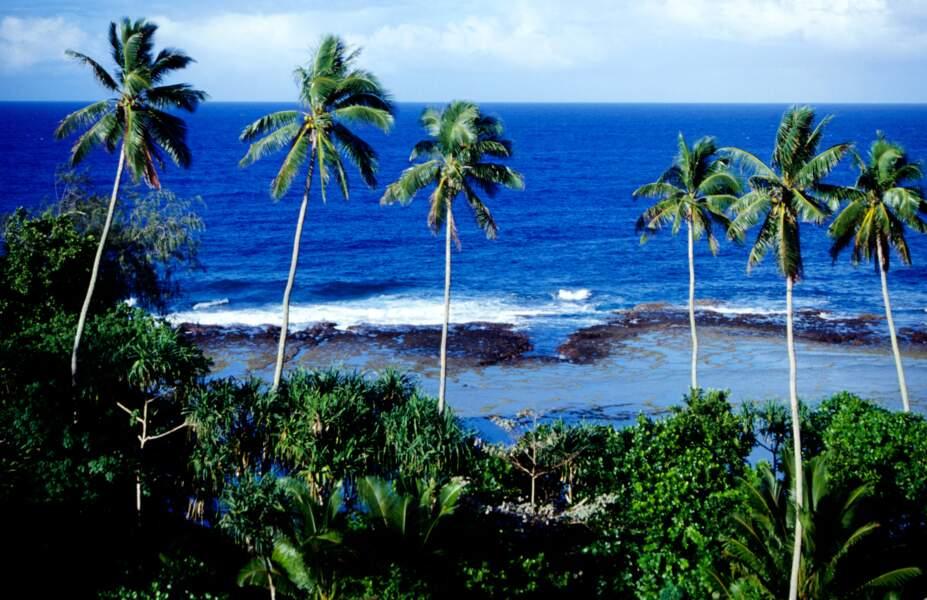
The Wallis and Futuna archipelago is probably one of France's least known overseas territories. Could this be due to its geographical isolation? These islands in Oceania share with those of French Polynesia the title of the French collectivities furthest from metropolitan France. Although the islands of Wallis and Futuna both have a paradise-like charm, they are quite different from each other. Separated by more than 200 kilometres of ocean, they are distinguished by their respective reliefs. The island of Wallis, relatively flat, is surrounded by a lagoon closed by a coral reef punctuated by four passes. The island of Futuna, on the other hand, has a more rugged and volcanic nature. The highest point on Futuna is Mount Puke, at 524 metres. The archipelago is now home to more than 13,000 inhabitants, but this population is experiencing a negative growth rate, particularly due to the departure of young people in search of professional prospects. Despite a significant economic potential, tourism in Wallis and Futuna remains a marginal activity, due to the archipelago's remoteness, the cost of transport to get there and the lack of local infrastructure.
Related articles
30 (great) ideas for your next hikes in France
What are the 20 sunniest cities in France?
Discover the 20 hottest cities in France
What to eat in France: typical dishes, tips and curiosities about French cuisine
Urbex: discovering abandoned places across France and Europe
The ranking of the most expensive cities in France in 2024
Auchel, Nord-Pas-de-Calais-Picardie, France